 Posted by
Introduction — a kitchen-table scenario that matters
I remember the time I set up a small prototype station in my garage and the smoke curled like steam from a simmering pot. In that moment I realized the role of a laser marking fume extractor: it’s the kitchen vent of a modern fab lab, pulling away particulates before they coat equipment or lungs. Recent shop-floor surveys report up to 70% of shops notice visible residue after short runs—so what are we missing?
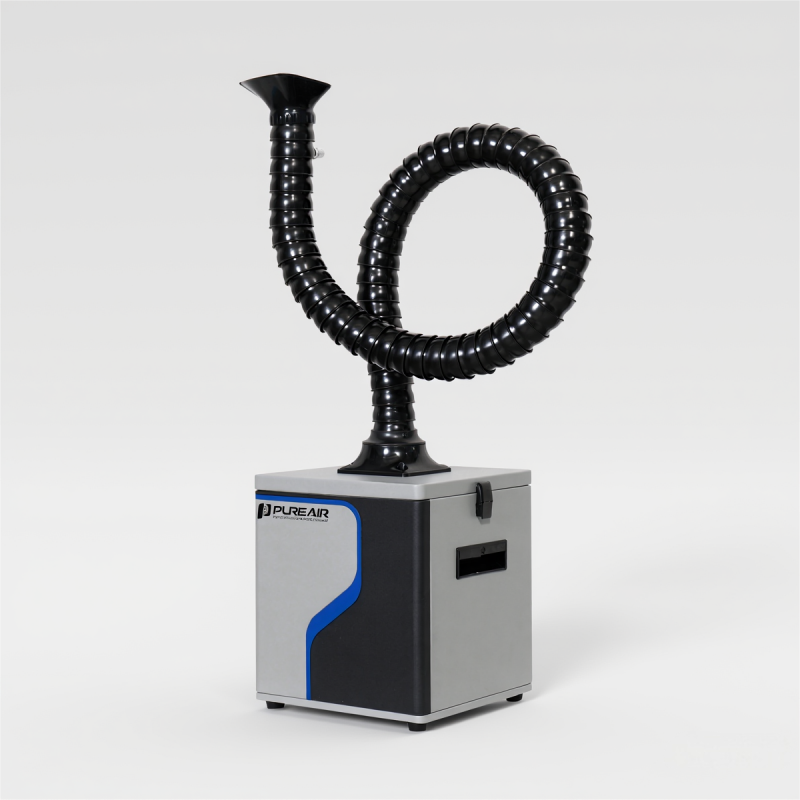
I’ll be blunt: I’ve seen systems fail because designers treated extraction like an appliance, not a recipe. (You can’t just slap on a fan and call it a day.) Good extraction mixes airflow velocity, HEPA filtration, and a dash of activated carbon—balanced like flavors in a sauce. I want to walk you through that balance in plain terms, with a few hard numbers and some real choices we can all use. Ready to move from simmer to a steady boil? Let’s keep going to the real faults behind common setups.
Part 2 — Where traditional fixes fall short (the deeper layer)
Why do many systems under-deliver?
When I talk about the laser printing fume extractor I mean the whole workflow: capture hood, ducting, fan, filter bank, and monitoring. Too often, manufacturers rely on single-point suction and expect the rest to compensate. That creates dead zones, reduced capture efficiency, and higher maintenance. The result is more downtime and more complaints—sound familiar?
Technically speaking, many old-school setups ignore pressure drop curves and mismatch fan curves to filter media. They pick large HEPA filters but forget to size the power converters or check airflow velocity at the hood. The mismatch raises noise and shortens filter life. Look, it’s simpler than you think: proper system design maps capture distance, hood geometry, and required CFM before choosing filters. I’ve seen a shop cut replacement costs by half simply by resizing ducts and adding a pre-filter stage. That one change lowered particulate load on the HEPA and stretched maintenance cycles—real savings on the floor.
Part 3 — Looking ahead: better principles and what to measure
What’s next for extraction tech?
We should expect smarter, modular units that adapt like a sous-chef. New principles center on staged filtration, sensor-driven control, and compact filtration cartridges that fit close to the source. For example, integrating particle sensors and flow meters lets a laser printing fume extractor reduce fan speed between runs, saving energy and extending filter life. I’m excited by systems that use edge computing nodes for local control—fast response, low latency. It’s practical; not a futuristic pipe dream.
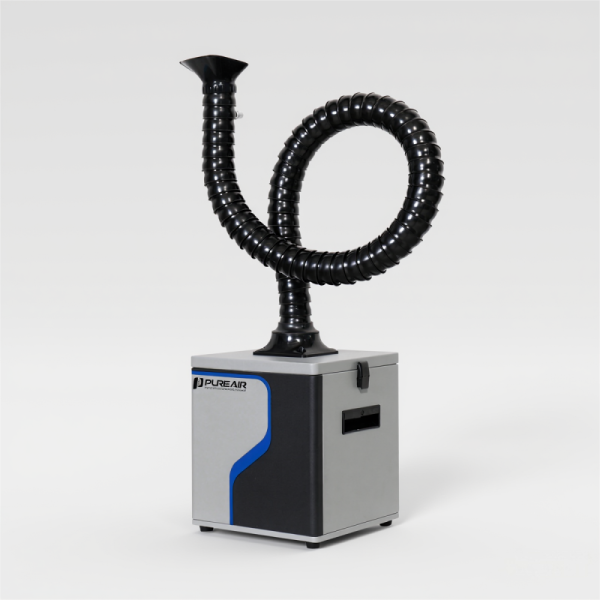
Case studies show gains: one mid-size maker replaced an overpowered static system with a demand-controlled setup. They cut energy draw by nearly 40% and reduced trips for filter changes. — funny how that works, right? My point is this: the future is less about brute force and more about matched systems and smart sensing (and yes—good mechanical layout).
To wrap up, here are three practical metrics I always use when evaluating a system: 1) capture efficiency at the work surface (percent of particulates captured within given distance), 2) total cost of ownership (energy + filter + labor over 3–5 years), and 3) sensor responsiveness (time to restore target airflow after a pulse). If you vet options with those in mind, you’ll choose a unit that actually performs, not just looks spec-heavy. For reliable partners and real-world designs, I point teams toward experienced vendors who understand both airflow and maintenance realities—like PURE-AIR.